Sustainability has moved far beyond a marketing message. For FMCG brands, it now shapes strategy, operations and long-term viability. And consumers are paying attention.
They research sourcing practices, question environmental claims and favour brands that can demonstrate real action. Investors are equally focused, viewing strong sustainability performance as a marker of resilience and future growth. Regulators, meanwhile, are tightening standards across global markets.
All of this places FMCG logistics under increasing scrutiny — particularly when it comes to sea freight.
Maritime shipping powers global trade, but it also carries a significant environmental footprint. For brands working towards ambitious climate targets, that creates a complex balancing act.
Related Reading: Why FMCG supply chains fail—and how tech saves them
Why sustainability is now a supply chain issue
For years, sustainability efforts focused heavily on product design and packaging. But today, the conversation runs much deeper.
Shoppers want transparency. They want to know where products are made, how they’re transported and what impact that journey has on the planet. Meanwhile, investors increasingly view strong environmental performance as a sign of long-term resilience and operational efficiency.
In short, sustainability has become a competitive differentiator.
For FMCG brands operating across international markets, that means looking hard at logistics — especially long-haul transport. And that inevitably brings sea freight into focus.
Related Reading: The power of cold chain logistics in the FMCG world
Sea freight still powers FMCG trade — But at a cost
Like it or not, sea freight remains the backbone of global FMCG logistics. Around 90% of world trade moves by sea. From food and beverages to household goods and personal care products, vast volumes of everyday items travel across oceans before landing on supermarket shelves.
The reason is simple: scale and cost.
Ocean shipping can move enormous quantities of goods efficiently and, compared with air freight, at significantly lower cost. When ocean freight rates are stable, sea transport remains one of the most commercially viable options for international trade.
But there’s a catch.
Maritime shipping is a major contributor to global emissions. Large container vessels burn heavy fuel oils, and their environmental footprint is substantial. For FMCG brands that have made public sustainability commitments, this creates tension between commercial efficiency and climate responsibility.
Sea freight may be cost-effective — but emissions now matter just as much as ocean freight rates.
The net-zero challenge for FMCG brands
Many FMCG businesses have set ambitious net-zero targets. The difficulty is that transport emissions often sit outside direct operational control.
Shipping lines, port operators and fuel providers all form part of a complex ecosystem. That makes decarbonisation a shared responsibility — and a complicated one at that.
The maritime industry faces real barriers. Infrastructure upgrades take time. Alternative fuels such as biofuels, green methanol, hydrogen and ammonia are promising, but scaling them safely and affordably remains a work in progress.
At the same time, FMCG supply chains are intricate and global. Brands must account for emissions not just in manufacturing, but across every stage of distribution. That includes sea freight legs that may stretch thousands of miles.
Progress depends on collaboration, innovation and long-term commitment.
Where innovation is making a difference
Despite the scale of the challenge, meaningful progress is underway across FMCG logistics.
Cold chain optimisation is one important area. For perishable FMCG goods, improving temperature-controlled container efficiency can reduce energy consumption and minimise waste. Better insulation, smarter monitoring and optimised loading all help lower emissions without compromising product integrity.
Packaging is another lever. Lighter, more compact packaging reduces container weight and maximises space utilisation. That means fewer shipments for the same volume of goods — cutting both emissions and overall transport spend.
Fuel innovation is perhaps the most visible frontier. Shipping lines are investing in cleaner alternatives and more efficient vessel designs. Slow steaming practices — where ships travel at reduced speeds — also cut fuel use and emissions, although this can impact transit times.
These developments may influence ocean freight rates in the short term, but they represent necessary steps towards long-term sustainability.
Related Reading: How FMCG brands use 3PL expertise to break into new markets
How FMCG businesses can ship greener — Without losing efficiency
The good news? Sustainability and efficiency don’t have to be opposites.
Smarter route planning is a strong starting point. Optimising shipping lanes, avoiding congestion hotspots and improving port coordination can reduce idle time and fuel burn.
Multi-modal strategies also offer opportunities. Combining sea freight with rail for inland transport, rather than relying solely on road haulage, can significantly lower emissions while maintaining reliability.
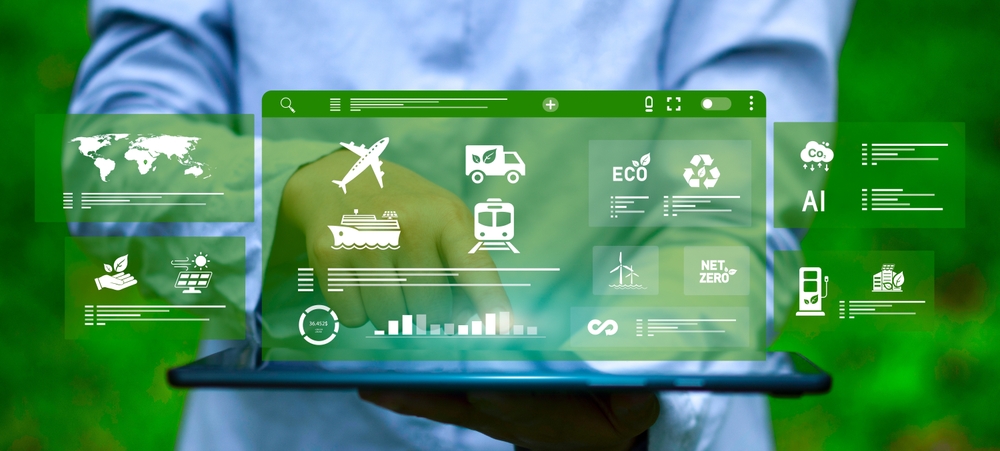
Data visibility is another powerful tool. Real-time tracking and analytics allow FMCG brands to measure emissions, monitor performance and identify inefficiencies. The clearer the data, the easier it becomes to make informed decisions about partners, routes and shipment volumes.
Finally, collaboration matters. Working closely with shipping providers to explore greener fuel options, carbon reporting and shared sustainability goals helps align commercial objectives with environmental targets.
The aim isn’t to abandon sea freight — it’s to make it smarter.
The future of sustainable FMCG logistics
Sea freight isn’t disappearing from FMCG supply chains any time soon. It’s too embedded, too scalable and too commercially critical.
But it is evolving.
As regulation tightens and environmental scrutiny increases, the industry is being pushed towards cleaner fuels, more efficient vessels and greater transparency. FMCG brands that proactively engage in this shift — rather than waiting for mandates — will be better positioned both reputationally and operationally.
In the long run, sustainability will influence everything from supplier selection to ocean freight rates. Brands that integrate environmental thinking into logistics strategy today will be more resilient tomorrow.
Related Reading: Enhancing FMCG logistics with technology in UAE
Key takeaway
Sea freight remains essential to FMCG logistics, yet its environmental impact demands urgent attention. As sustainability expectations rise, brands must manage ocean freight rates, operational efficiency and emissions performance simultaneously. By improving cold chain efficiency, optimising packaging, refining route planning and collaborating on cleaner fuel solutions, FMCG businesses can reduce their footprint while maintaining global reach.
The future of FMCG trade depends on logistics strategies that deliver commercial performance alongside measurable environmental progress. Looking forward to sailing towards greener FMCG logistics? Contact our experts today!