Tariffs have a habit of arriving with very little warning — and when they do, supply chains tend to feel it first. Suddenly, costs shift, timelines stretch, and plans that once felt solid need a rethink.

For businesses operating across borders, tariffs aren’t just a trade policy issue. They directly affect sourcing, pricing, inventory decisions and overall supply chain optimisation. The good news? With the right strategy, tariffs don’t have to derail your operations.

Here’s how businesses can adapt their supply chains, stay compliant, and remain competitive — even as tariff landscapes continue to evolve.

Related Reading: Aramex air freight market monitor

First things first: what tariffs really mean for your supply chain

At their core, tariffs are taxes placed on imported goods. They vary by product type, country of origin and destination, and they change more often than many businesses would like.

The impact on supply chains can be immediate. Increased landed costs squeeze margins. Customs checks can slow down shipments. Pricing strategies may need revisiting. And if compliance isn’t spot on, penalties and delays can quickly follow.

This is why tariffs should never be treated as a one-off disruption. They need to be factored into broader supply chain optimisation efforts — not handled in isolation.

Rethinking sourcing: flexibility beats dependency

One of the biggest risks tariffs expose is over-reliance on a single sourcing location. When duties increase overnight, businesses tied to one market can struggle to respond quickly.

Diversifying suppliers across regions helps spread that risk. It also gives businesses more room to manoeuvre when tariffs shift, allowing them to rebalance sourcing without major operational upheaval.

This doesn’t mean abandoning long-term supplier relationships. It means building flexibility into the supply chain so decisions aren’t dictated by a single tariff change.

Related Reading: The biggest shifts in automotive logistics right now

Inventory strategies need a tariff lens

Tariffs can dramatically alter the economics of inventory. In some cases, businesses may choose to bring stock in earlier to avoid incoming duties. In others, holding excess inventory may simply increase exposure and carrying costs.

The key is visibility. Understanding which SKUs are tariff-sensitive — and how those costs affect overall margins — allows for smarter inventory planning. This is where data-led supply chain optimisation becomes critical, helping teams balance availability, cash flow and risk.

Tariff engineering: useful, but not casual

Tariff engineering — adjusting product design or classification to access lower duty rates — can be effective, but it needs to be handled carefully.

Changes to product composition, packaging or classification must always align with customs regulations. Missteps here can create more problems than they solve. Any tariff engineering approach should be backed by expert guidance and thorough documentation to ensure full customs compliance.

Customs compliance is non-negotiable

When tariffs are in flux, customs authorities tend to scrutinise shipments more closely. That makes accurate documentation and classification essential.

Errors in HS codes, declared values, or country-of-origin information can lead to delays, fines and reputational damage. Strong customs compliance processes — supported by experienced partners — help keep goods moving smoothly, even as regulations change.

For many businesses, working with logistics partners that understand local and global customs environments is a major advantage.

Related Reading: Is your supply chain holding back production growth?

Technology turns disruption into foresight

Responding to tariffs effectively requires more than spreadsheets and email chains. Technology plays a central role in helping supply chains stay agile.

Modern supply chain platforms offer real-time visibility across sourcing, inventory and transport. Analytics tools help model tariff scenarios before they happen, allowing businesses to understand cost implications and adjust strategies proactively.

Automation also reduces risk. From customs documentation to inventory updates, removing manual steps improves accuracy and speeds up response times when tariff rules shift.
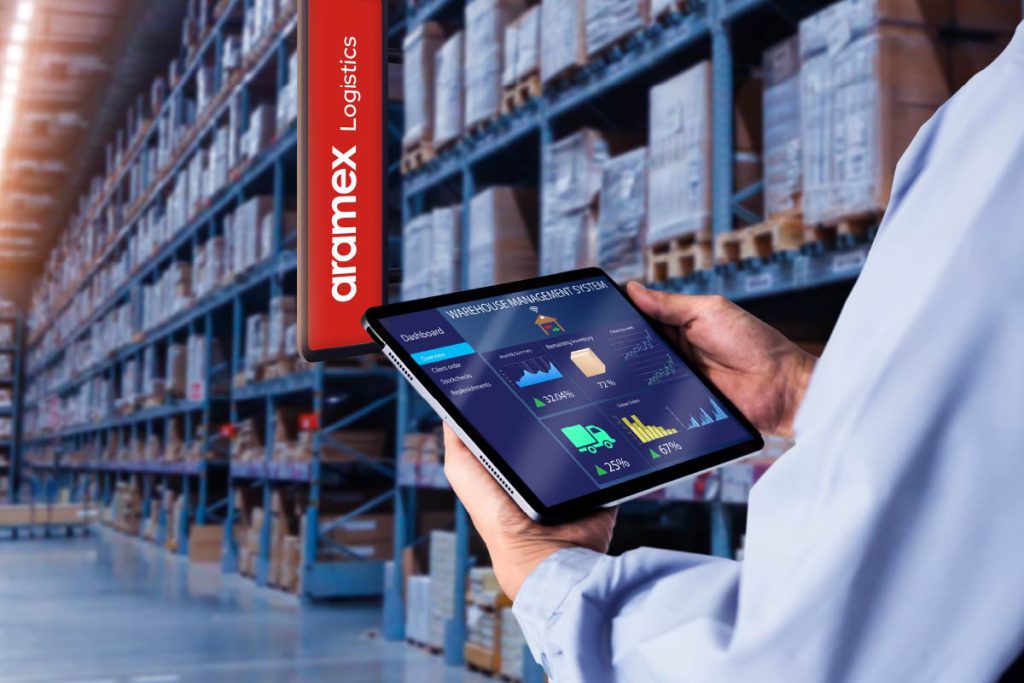
inventory optimization, warehousing and distribution, inventory management
Inventory real-time visibility

Learning from the Aramex tariff strategy

As a global logistics company operating across multiple trade lanes, Aramex has had to adapt continually to changing tariff environments. Its approach offers useful lessons for businesses navigating similar challenges.

Operational resilience
Aramex strengthens resilience by expanding regional logistics services and investing in flexible infrastructure, allowing supply chains to adapt quickly to trade shifts.

Advanced analytics
By using data to anticipate changes, Aramex can help businesses model different tariff scenarios and make informed decisions before costs escalate.

Customs compliance expertise
Strong compliance frameworks reduce friction at borders, minimising delays and helping businesses avoid costly errors — a core pillar of the Aramex tariff strategy.

Related Reading: Choosing the right freight partner: What really matters

Tariffs aren’t temporary — adaptability is essential

Tariffs are now a permanent feature of global trade. Businesses that treat them as short-term disruptions often find themselves constantly reacting. Those that embed tariff awareness into their supply chain strategy are far better positioned to adapt.

By diversifying suppliers, optimising inventory, investing in technology and prioritising customs compliance, companies can protect margins and maintain momentum — even in uncertain trade environments.

Key Takeaway

Tariffs don’t have to destabilise your supply chain. With the right mix of supply chain optimisation, strong customs compliance, smart use of data and a flexible sourcing strategy — supported by experienced partners like Aramex — businesses can stay resilient, responsive and competitive, no matter how trade rules evolve.

Looking to strengthen your supply chain? Our team is here to help.
Leave a Reply

Your email address will not be published.

[wpforms id="2641"]
<div class="wpforms-container wpforms-container-full form-toadd" id="wpforms-2641"><form id="wpforms-form-2641" class="wpforms-validate wpforms-form wpforms-ajax-form" data-formid="2641" method="post" enctype="multipart/form-data" action="/how-to-adapt-your-supply-chain-strategy-to-evolving-tariffs/" data-token="ad24204839b47312517e2ef28638d16f"><noscript class="wpforms-error-noscript">Please enable JavaScript in your browser to complete this form.</noscript><div class="wpforms-field-container"><div id="wpforms-2641-field_1-container" class="wpforms-field wpforms-field-name" data-field-id="1"><label class="wpforms-field-label" for="wpforms-2641-field_1">Name <span class="wpforms-required-label">*</span></label><div class="wpforms-field-row wpforms-field-large"><div class="wpforms-field-row-block wpforms-first wpforms-one-half"><input type="text" id="wpforms-2641-field_1" class="wpforms-field-name-first wpforms-field-required" name="wpforms[fields][1][first]" required><label for="wpforms-2641-field_1" class="wpforms-field-sublabel after ">First</label></div><div class="wpforms-field-row-block wpforms-one-half"><input type="text" id="wpforms-2641-field_1-last" class="wpforms-field-name-last wpforms-field-required" name="wpforms[fields][1][last]" required><label for="wpforms-2641-field_1-last" class="wpforms-field-sublabel after ">Last</label></div></div></div><div id="wpforms-2641-field_10-container" class="wpforms-field wpforms-field-layout" data-field-id="10"><label class="wpforms-field-label wpforms-label-hide" for="wpforms-2641-field_10">Layout</label><div class="wpforms-field-layout-columns wpforms-field-layout-preset-50-50"><div class="wpforms-layout-column wpforms-layout-column-50"><div id="wpforms-2641-field_2-container" class="wpforms-field wpforms-field-email" data-field-id="2"><label class="wpforms-field-label" for="wpforms-2641-field_2">Work Email <span class="wpforms-required-label">*</span></label><input type="email" id="wpforms-2641-field_2" class="wpforms-field-large wpforms-field-required" name="wpforms[fields][2]" required></div></div><div class="wpforms-layout-column wpforms-layout-column-50"><div id="wpforms-2641-field_12-container" class="wpforms-field wpforms-field-phone" data-field-id="12"><label class="wpforms-field-label" for="wpforms-2641-field_12">Phone <span class="wpforms-required-label">*</span></label><input type="tel" id="wpforms-2641-field_12" class="wpforms-field-medium wpforms-field-required wpforms-smart-phone-field" data-rule-smart-phone-field="true" name="wpforms[fields][12]" required></div></div></div></div><div id="wpforms-2641-field_9-container" class="wpforms-field wpforms-field-layout" data-field-id="9"><label class="wpforms-field-label wpforms-label-hide" for="wpforms-2641-field_9">Layout</label><div class="wpforms-field-layout-columns wpforms-field-layout-preset-50-50"><div class="wpforms-layout-column wpforms-layout-column-50"><div id="wpforms-2641-field_4-container" class="wpforms-field wpforms-field-text" data-field-id="4"><label class="wpforms-field-label" for="wpforms-2641-field_4">Company <span class="wpforms-required-label">*</span></label><input type="text" id="wpforms-2641-field_4" class="wpforms-field-large wpforms-field-required" name="wpforms[fields][4]" required></div><div id="wpforms-2641-field_14-container" class="wpforms-field wpforms-field-select wpforms-field-select-style-classic" data-field-id="14"><label class="wpforms-field-label" for="wpforms-2641-field_14">Country <span class="wpforms-required-label">*</span></label><select id="wpforms-2641-field_14" class="wpforms-field-medium wpforms-field-required" name="wpforms[fields][14]" required="required"><option value="" class="placeholder" disabled selected='selected'>Select Country</option><option value="Select a country" >Select a country</option><option value="Afghanistan" >Afghanistan</option><option value="Afghanistan" >Afghanistan</option><option value="Angola" >Angola</option><option value="Argentina" >Argentina</option><option value="Australia" >Australia</option><option value="Austria" >Austria</option><option value="Azerbaijan" >Azerbaijan</option><option value="Bahrain" >Bahrain</option><option value="Bangladesh" >Bangladesh</option><option value="Belarus" >Belarus</option><option value="Belgium" >Belgium</option><option value="Benin" >Benin</option><option value="Bolivia" >Bolivia</option><option value="Brazil" >Brazil</option><option value="Bulgaria" >Bulgaria</option><option value="Cambodia" >Cambodia</option><option value="Cameroon" >Cameroon</option><option value="Canada" >Canada</option><option value="Central African Republic" >Central African Republic</option><option value="Chad" >Chad</option><option value="China" >China</option><option value="Colombia" >Colombia</option><option value="Cuba" >Cuba</option><option value="Cyprus" >Cyprus</option><option value="Czechia" >Czechia</option><option value="Congo" >Congo</option><option value="Denmark" >Denmark</option><option value="Dominican Republic" >Dominican Republic</option><option value="Ecuador" >Ecuador</option><option value="Egypt" >Egypt</option><option value="El Salvador" >El Salvador</option><option value="Ethiopia" >Ethiopia</option><option value="Finland" >Finland</option><option value="France" >France</option><option value="Germany" >Germany</option><option value="Ghana" >Ghana</option><option value="Greece" >Greece</option><option value="Guatemala" >Guatemala</option><option value="Guinea" >Guinea</option><option value="Haiti" >Haiti</option><option value="Honduras" >Honduras</option><option value="Hungary" >Hungary</option><option value="India" >India</option><option value="Indonesia" >Indonesia</option><option value="Iran" >Iran</option><option value="Iraq" >Iraq</option><option value="Ireland" >Ireland</option><option value="Italy" >Italy</option><option value="Japan" >Japan</option><option value="Jordan" >Jordan</option><option value="Kazakhstan" >Kazakhstan</option><option value="Kenya" >Kenya</option><option value="Kuwait" >Kuwait</option><option value="Kyrgyzstan" >Kyrgyzstan</option><option value="Laos" >Laos</option><option value="Lebanon" >Lebanon</option><option value="Liberia" >Liberia</option><option value="Libya" >Libya</option><option value="Madagascar" >Madagascar</option><option value="Malawi" >Malawi</option><option value="Malaysia" >Malaysia</option><option value="Mali" >Mali</option><option value="Mauritania" >Mauritania</option><option value="Mexico" >Mexico</option><option value="Morocco" >Morocco</option><option value="Mozambique" >Mozambique</option><option value="Nepal" >Nepal</option><option value="Netherlands" >Netherlands</option><option value="New Zealand" >New Zealand</option><option value="Nigeria" >Nigeria</option><option value="Norway" >Norway</option><option value="Oman" >Oman</option><option value="Pakistan" >Pakistan</option><option value="Palestine" >Palestine</option><option value="Papua New Guinea" >Papua New Guinea</option><option value="Philippines" >Philippines</option><option value="Poland" >Poland</option><option value="Portugal" >Portugal</option><option value="Qatar" >Qatar</option><option value="Romania" >Romania</option><option value="Saudi Arabia" >Saudi Arabia</option><option value="Senegal" >Senegal</option><option value="Singapore" >Singapore</option><option value="South Africa" >South Africa</option><option value="Spain" >Spain</option><option value="Sudan" >Sudan</option><option value="Sri Lanka" >Sri Lanka</option><option value="Thailand" >Thailand</option><option value="Tunisia" >Tunisia</option><option value="Turkey" >Turkey</option><option value="United Arab Emirates" >United Arab Emirates</option><option value="United Kingdom" >United Kingdom</option><option value="United States" >United States</option></select></div></div><div class="wpforms-layout-column wpforms-layout-column-50"><div id="wpforms-2641-field_5-container" class="wpforms-field wpforms-field-text" data-field-id="5"><label class="wpforms-field-label" for="wpforms-2641-field_5">Job Title</label><input type="text" id="wpforms-2641-field_5" class="wpforms-field-large" name="wpforms[fields][5]" ></div></div></div></div></div><div class="wpforms-submit-container"><input type="hidden" name="wpforms[id]" value="2641"><input type="hidden" name="wpforms[author]" value="24"><input type="hidden" name="wpforms[post_id]" value="5742"><button type="submit" name="wpforms[submit]" id="wpforms-submit-2641" class="wpforms-submit btn-danger" data-alt-text="Sending..." data-submit-text="Submit" aria-live="assertive" value="wpforms-submit">Submit</button><img src="https://blogistics.aramex.com/wp-content/plugins/wpforms/assets/images/submit-spin.svg" class="wpforms-submit-spinner" style="display: none;" width="26" height="26" alt="Loading"></div></form></div> <!-- .wpforms-container -->