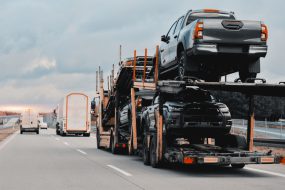
Electric vehicles are no longer a future ambition — they’re a present-day reality. As EV adoption accelerates across global markets, the automotive industry is being forced to rethink more than just vehicle design. The way cars are built, moved, and delivered is changing too, and that shift is placing new demands on automotive logistics.
For logistics companies supporting auto supply chains, the rise of EVs introduces fresh complexity alongside real opportunity. From battery handling to new production footprints, EV logistics is rewriting the rules of traditional automotive supply chains.
Related Reading: Unlocking the power of data in automotive logistics
Why EVs change the supply chain model
Conventional automotive logistics was built around internal combustion engines. Supply chains focused on engines, gearboxes, exhaust systems, and fuel components — all supported by decades of established processes.
EVs disrupt that model entirely. While electric vehicles may have fewer moving parts, the components they do rely on are more specialised, higher value, and often more sensitive to transport conditions.
Three areas, in particular, are reshaping auto supply chains.
1. Batteries become the centre of gravity
Batteries are the single most critical — and complex — EV component. They rely on raw materials such as lithium, cobalt, and nickel, which are often sourced globally and processed in limited locations.
For automotive logistics providers, this introduces new challenges. Batteries are heavy, hazardous, and highly regulated, requiring specialist handling, packaging, and transport. Delays or damage at this stage can ripple through the entire production schedule.
EV logistics demands tighter coordination, enhanced safety protocols, and greater visibility across the battery supply chain.
Related Reading: Automotive logistics made easy: a strategy guide
2. Electric motors and precision manufacturing
Electric motors may be mechanically simpler than combustion engines, but they require extremely precise manufacturing. Components must arrive on time and in perfect condition to avoid production delays.
This places increased pressure on logistics companies to deliver just-in-time services with minimal margin for error. Reliability matters as much as speed, particularly as EV production volumes continue to scale.
3. Electronics drive complexity
Modern EVs rely heavily on advanced electronics — from power management systems to driver assistance technologies. Many of these components are high-value, fragile, and sourced from global suppliers.
That adds layers of complexity to auto supply chains, increasing the need for secure transport, specialised storage, and robust tracking systems.
How logistics companies are adapting to EV logistics
As EV production grows, logistics companies are evolving their operating models to meet new demands. Traditional automotive logistics approaches are no longer enough.
Several key shifts are already taking shape:
More integrated supply chain solutions
Visibility is now critical. Logistics companies are investing in integrated platforms that connect suppliers, manufacturers, and distributors in near real time.
For EV logistics, this level of transparency helps manage risk, reduce delays, and ensure that critical components arrive exactly when needed. It also supports better forecasting as production volumes fluctuate.
Sustainability moves from ambition to requirement
Sustainability is no longer a “nice to have” in automotive logistics. As EVs position themselves as a greener alternative, their supply chains are under scrutiny too.
Logistics companies are responding by optimising routes, adopting alternative fuels, and investing in more efficient fleets. These measures reduce emissions while also improving cost efficiency — a growing priority for auto supply chains under pressure.
Related Reading: Enhancing automotive logistics with technology
Stronger collaboration across the ecosystem
EV supply chains are more interconnected than ever. Manufacturers, battery suppliers, technology partners, and logistics companies must work closely to manage complexity.
Strategic partnerships are becoming essential. By sharing data, infrastructure, and expertise, stakeholders can reduce friction and improve resilience across the supply chain.

Infrastructure and compliance catch up
EV logistics also demands new infrastructure. Charging-ready transport fleets, specialist handling facilities, and compliant storage environments are increasingly necessary.
At the same time, regulatory requirements continue to evolve. From battery transport regulations to environmental reporting, logistics companies must stay compliant across multiple jurisdictions to avoid costly disruption.
Related Reading: The biggest shifts in automotive logistics right now
The impact on the automotive industry
These changes are already influencing how automotive manufacturers design production strategies and choose logistics partners.
Those who adapt quickly are seeing tangible benefits. Improved coordination leads to fewer delays, better cost control, and stronger supply chain resilience. Sustainability gains enhance brand reputation, while reliable EV logistics support faster market expansion.
For logistics companies, supporting EV supply chains isn’t just about operational capability — it’s about long-term relevance in a transforming industry.
What the future holds for automotive logistics
Looking ahead, EV logistics will continue to evolve alongside technology and market growth.
Automation and AI are expected to play a larger role in warehouse operations, transport planning, and demand forecasting. Digital transformation will deepen, giving logistics companies greater control and insight across increasingly global auto supply chains.
As EV production expands across regions, cross-border collaboration will intensify. Logistics companies with strong international networks and sector expertise will be best positioned to support this growth.
Key takeaway
The rise of electric vehicles is fundamentally reshaping automotive logistics. From battery transport to advanced electronics handling, EV logistics requires new capabilities, tighter coordination, and a stronger focus on sustainability.
Logistics companies that adapt early — by investing in integrated systems, infrastructure, and partnerships — will play a central role in the future of auto supply chains.
Let’s shape the future of automotive logistics together—contact us today!