In healthcare logistics, there’s very little room for error.

A late fashion delivery is inconvenient. A delayed or compromised pharmaceutical shipment? That’s potentially life-altering. And as demand for temperature-sensitive medicines continues to surge, the pressure on pharma shipping networks has never been higher.

From specialty biologics to advanced cell and gene therapies, modern treatments are more delicate, more valuable, and far less forgiving when it comes to temperature variation. At the same time, regulatory scrutiny is tightening, and service expectations are rising across the board.

The result? Healthcare logistics providers are operating in one of the most complex — and high-stakes — environments in global supply chains.

Related Reading: Cold chain logistics: Expert tips for pharma professionals

The growing strain on the cold chain

Today’s pharmaceutical supply chain looks very different from what it did a decade ago.

Specialty medicines now make up a growing share of the market, and many require strict temperature-controlled transport from production line to patient. Some must remain within extremely narrow temperature ranges — whether that’s 2–8°C chilled conditions or deep-frozen environments for advanced therapies.

Add to that cross-border compliance requirements, evolving Good Distribution Practice (GDP) standards, and rising expectations from hospitals and pharmacies, and the challenge becomes clear. Healthcare logistics is no longer simply about moving goods efficiently. It’s about protecting product integrity at every single stage.

That means tighter processes, better infrastructure, and full visibility across the cold chain.

Related Reading: How to achieve seamless global shipping in healthcare logistics

Why cold chain failures hit hard — commercially and clinically

When temperature excursions happen, the impact is immediate and expensive.

Compromised pharmaceuticals often have to be destroyed. For high-value biologics, that can mean significant financial losses. But the commercial damage doesn’t stop there.

Cold chain breaches can trigger compliance investigations, regulatory penalties, and serious reputational harm. In healthcare logistics, trust is everything. Manufacturers, regulators, and healthcare providers rely on logistics partners to deliver safely and consistently.

Then there’s the operational fallout. A rejected shipment can disrupt inventory planning, delay replenishment, and interrupt patient treatment timelines. In critical care scenarios, even small delays can have serious consequences.

Ultimately, cold chain failures aren’t just operational hiccups. They’re business risks with direct implications for patient outcomes.

How innovation is strengthening pharma shipping

To meet rising expectations, logistics providers are investing heavily in smarter, more resilient cold chain solutions.

Qualified passive packaging is one such innovation. These advanced packaging systems are designed to maintain stable internal temperatures for extended periods — even across long international routes. By reducing exposure to external conditions, they provide an additional layer of security against unexpected delays.

Real-time monitoring is another transformative development in pharma shipping. IoT-enabled sensors and data loggers now provide continuous visibility into shipment conditions. Centralised control towers monitor temperature, humidity, and transit status in real time, triggering instant alerts if a deviation occurs. This allows logistics teams to intervene quickly — sometimes before a shipment is compromised.

For particularly sensitive or high-value products, active temperature-controlled transport is becoming more common. Battery-powered containers and refrigerated vehicles maintain precise temperature settings throughout transit, offering greater control during the final mile and beyond.

Predictive analytics is also playing a growing role. By analysing historical lane data, seasonal trends, and real-time environmental factors, logistics providers can anticipate potential risks and adjust routing or packaging strategies accordingly. This proactive approach reduces the likelihood of temperature excursions and strengthens overall reliability.
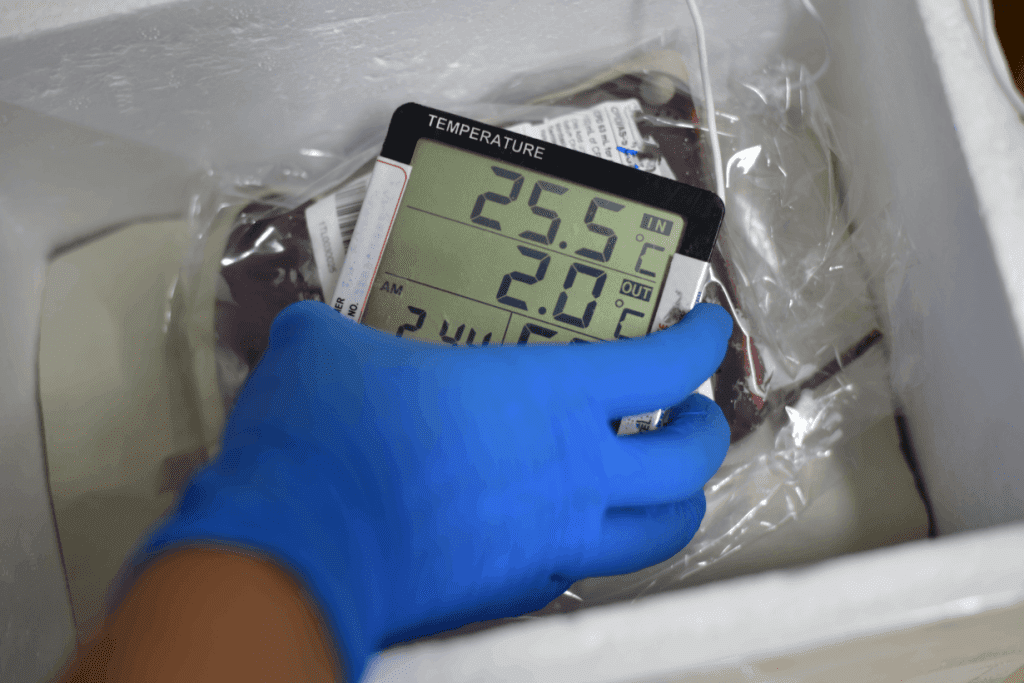
Cold-chain solutions

What healthcare shippers should be doing now

For manufacturers and healthcare providers, strengthening cold chain resilience isn’t optional — it’s essential.

First, partnering with experienced healthcare logistics specialists is critical. Providers who understand regulatory complexity and temperature-controlled transport requirements are better equipped to safeguard compliance and performance.

Second, careful lane planning can reduce exposure to risk. Understanding transit times, climate conditions, and potential bottlenecks enables more accurate forecasting and smarter routing decisions.

Packaging qualification is another key consideration. Not all temperature-controlled packaging performs equally. Ensuring that packaging is tested and validated for specific product requirements helps minimise exposure to thermal fluctuations.

Investing in monitoring technology also pays dividends. Enhanced visibility across shipments allows for faster response times and better data-driven decision-making.

Finally, training should not be overlooked. Staff handling temperature-sensitive products must understand proper procedures, documentation requirements, and contingency protocols. A well-trained team is one of the strongest safeguards in any healthcare logistics operation.

Related Reading: Why air freight is the unsung hero of healthcare logistics

Building a more resilient future for healthcare logistics

The pressure on pharma shipping networks isn’t going away. If anything, it’s intensifying.

As more advanced therapies enter the market and patient expectations continue to rise, temperature-controlled transport will remain central to supply chain performance. Providers that prioritise innovation, visibility, and compliance will be better positioned to navigate this evolving landscape.

Cold chain integrity isn’t just about protecting products. It’s about protecting patients, partnerships, and brand reputation.

Related Reading: Unlock real results: data-driven healthcare logistics

Key takeaway

Healthcare logistics is facing unprecedented pressure as demand for temperature-sensitive pharmaceuticals grows. Cold chain failures carry serious financial, regulatory, and patient risks, making integrity and compliance non-negotiable.

By investing in temperature-controlled transport, real-time monitoring, predictive analytics, and strong logistics partnerships, organisations can build resilient pharma shipping networks that safeguard both commercial performance and patient outcomes.

In healthcare, reliability isn’t a competitive advantage. It’s a responsibility. Want to know more? Reach out today.


Leave a Reply

Your email address will not be published.

[wpforms id="2641"]
<div class="wpforms-container wpforms-container-full form-toadd" id="wpforms-2641"><form id="wpforms-form-2641" class="wpforms-validate wpforms-form wpforms-ajax-form" data-formid="2641" method="post" enctype="multipart/form-data" action="/cold-chain-in-healthcare-logistics-what-you-must-know/" data-token="723d72b30b3bbac3610c457f64bb94ed"><noscript class="wpforms-error-noscript">Please enable JavaScript in your browser to complete this form.</noscript><div class="wpforms-field-container"><div id="wpforms-2641-field_1-container" class="wpforms-field wpforms-field-name" data-field-id="1"><label class="wpforms-field-label" for="wpforms-2641-field_1">Name <span class="wpforms-required-label">*</span></label><div class="wpforms-field-row wpforms-field-large"><div class="wpforms-field-row-block wpforms-first wpforms-one-half"><input type="text" id="wpforms-2641-field_1" class="wpforms-field-name-first wpforms-field-required" name="wpforms[fields][1][first]" required><label for="wpforms-2641-field_1" class="wpforms-field-sublabel after ">First</label></div><div class="wpforms-field-row-block wpforms-one-half"><input type="text" id="wpforms-2641-field_1-last" class="wpforms-field-name-last wpforms-field-required" name="wpforms[fields][1][last]" required><label for="wpforms-2641-field_1-last" class="wpforms-field-sublabel after ">Last</label></div></div></div><div id="wpforms-2641-field_10-container" class="wpforms-field wpforms-field-layout" data-field-id="10"><label class="wpforms-field-label wpforms-label-hide" for="wpforms-2641-field_10">Layout</label><div class="wpforms-field-layout-columns wpforms-field-layout-preset-50-50"><div class="wpforms-layout-column wpforms-layout-column-50"><div id="wpforms-2641-field_2-container" class="wpforms-field wpforms-field-email" data-field-id="2"><label class="wpforms-field-label" for="wpforms-2641-field_2">Work Email <span class="wpforms-required-label">*</span></label><input type="email" id="wpforms-2641-field_2" class="wpforms-field-large wpforms-field-required" name="wpforms[fields][2]" required></div></div><div class="wpforms-layout-column wpforms-layout-column-50"><div id="wpforms-2641-field_12-container" class="wpforms-field wpforms-field-phone" data-field-id="12"><label class="wpforms-field-label" for="wpforms-2641-field_12">Phone <span class="wpforms-required-label">*</span></label><input type="tel" id="wpforms-2641-field_12" class="wpforms-field-medium wpforms-field-required wpforms-smart-phone-field" data-rule-smart-phone-field="true" name="wpforms[fields][12]" required></div></div></div></div><div id="wpforms-2641-field_9-container" class="wpforms-field wpforms-field-layout" data-field-id="9"><label class="wpforms-field-label wpforms-label-hide" for="wpforms-2641-field_9">Layout</label><div class="wpforms-field-layout-columns wpforms-field-layout-preset-50-50"><div class="wpforms-layout-column wpforms-layout-column-50"><div id="wpforms-2641-field_4-container" class="wpforms-field wpforms-field-text" data-field-id="4"><label class="wpforms-field-label" for="wpforms-2641-field_4">Company <span class="wpforms-required-label">*</span></label><input type="text" id="wpforms-2641-field_4" class="wpforms-field-large wpforms-field-required" name="wpforms[fields][4]" required></div><div id="wpforms-2641-field_14-container" class="wpforms-field wpforms-field-select wpforms-field-select-style-classic" data-field-id="14"><label class="wpforms-field-label" for="wpforms-2641-field_14">Country <span class="wpforms-required-label">*</span></label><select id="wpforms-2641-field_14" class="wpforms-field-medium wpforms-field-required" name="wpforms[fields][14]" required="required"><option value="" class="placeholder" disabled selected='selected'>Select Country</option><option value="Select a country" >Select a country</option><option value="Afghanistan" >Afghanistan</option><option value="Afghanistan" >Afghanistan</option><option value="Angola" >Angola</option><option value="Argentina" >Argentina</option><option value="Australia" >Australia</option><option value="Austria" >Austria</option><option value="Azerbaijan" >Azerbaijan</option><option value="Bahrain" >Bahrain</option><option value="Bangladesh" >Bangladesh</option><option value="Belarus" >Belarus</option><option value="Belgium" >Belgium</option><option value="Benin" >Benin</option><option value="Bolivia" >Bolivia</option><option value="Brazil" >Brazil</option><option value="Bulgaria" >Bulgaria</option><option value="Cambodia" >Cambodia</option><option value="Cameroon" >Cameroon</option><option value="Canada" >Canada</option><option value="Central African Republic" >Central African Republic</option><option value="Chad" >Chad</option><option value="China" >China</option><option value="Colombia" >Colombia</option><option value="Cuba" >Cuba</option><option value="Cyprus" >Cyprus</option><option value="Czechia" >Czechia</option><option value="Congo" >Congo</option><option value="Denmark" >Denmark</option><option value="Dominican Republic" >Dominican Republic</option><option value="Ecuador" >Ecuador</option><option value="Egypt" >Egypt</option><option value="El Salvador" >El Salvador</option><option value="Ethiopia" >Ethiopia</option><option value="Finland" >Finland</option><option value="France" >France</option><option value="Germany" >Germany</option><option value="Ghana" >Ghana</option><option value="Greece" >Greece</option><option value="Guatemala" >Guatemala</option><option value="Guinea" >Guinea</option><option value="Haiti" >Haiti</option><option value="Honduras" >Honduras</option><option value="Hungary" >Hungary</option><option value="India" >India</option><option value="Indonesia" >Indonesia</option><option value="Iran" >Iran</option><option value="Iraq" >Iraq</option><option value="Ireland" >Ireland</option><option value="Italy" >Italy</option><option value="Japan" >Japan</option><option value="Jordan" >Jordan</option><option value="Kazakhstan" >Kazakhstan</option><option value="Kenya" >Kenya</option><option value="Kuwait" >Kuwait</option><option value="Kyrgyzstan" >Kyrgyzstan</option><option value="Laos" >Laos</option><option value="Lebanon" >Lebanon</option><option value="Liberia" >Liberia</option><option value="Libya" >Libya</option><option value="Madagascar" >Madagascar</option><option value="Malawi" >Malawi</option><option value="Malaysia" >Malaysia</option><option value="Mali" >Mali</option><option value="Mauritania" >Mauritania</option><option value="Mexico" >Mexico</option><option value="Morocco" >Morocco</option><option value="Mozambique" >Mozambique</option><option value="Nepal" >Nepal</option><option value="Netherlands" >Netherlands</option><option value="New Zealand" >New Zealand</option><option value="Nigeria" >Nigeria</option><option value="Norway" >Norway</option><option value="Oman" >Oman</option><option value="Pakistan" >Pakistan</option><option value="Palestine" >Palestine</option><option value="Papua New Guinea" >Papua New Guinea</option><option value="Philippines" >Philippines</option><option value="Poland" >Poland</option><option value="Portugal" >Portugal</option><option value="Qatar" >Qatar</option><option value="Romania" >Romania</option><option value="Saudi Arabia" >Saudi Arabia</option><option value="Senegal" >Senegal</option><option value="Singapore" >Singapore</option><option value="South Africa" >South Africa</option><option value="Spain" >Spain</option><option value="Sudan" >Sudan</option><option value="Sri Lanka" >Sri Lanka</option><option value="Thailand" >Thailand</option><option value="Tunisia" >Tunisia</option><option value="Turkey" >Turkey</option><option value="United Arab Emirates" >United Arab Emirates</option><option value="United Kingdom" >United Kingdom</option><option value="United States" >United States</option></select></div></div><div class="wpforms-layout-column wpforms-layout-column-50"><div id="wpforms-2641-field_5-container" class="wpforms-field wpforms-field-text" data-field-id="5"><label class="wpforms-field-label" for="wpforms-2641-field_5">Job Title</label><input type="text" id="wpforms-2641-field_5" class="wpforms-field-large" name="wpforms[fields][5]" ></div></div></div></div></div><div class="wpforms-submit-container"><input type="hidden" name="wpforms[id]" value="2641"><input type="hidden" name="wpforms[author]" value="24"><input type="hidden" name="wpforms[post_id]" value="5786"><button type="submit" name="wpforms[submit]" id="wpforms-submit-2641" class="wpforms-submit btn-danger" data-alt-text="Sending..." data-submit-text="Submit" aria-live="assertive" value="wpforms-submit">Submit</button><img src="https://blogistics.aramex.com/wp-content/plugins/wpforms/assets/images/submit-spin.svg" class="wpforms-submit-spinner" style="display: none;" width="26" height="26" alt="Loading"></div></form></div> <!-- .wpforms-container -->