In pharmaceuticals, there’s very little margin for error. When products depend on strict temperature control to remain safe and effective, logistics becomes just as critical as formulation or manufacturing.
That’s where cold chain logistics comes in. From vaccines and biologics to insulin and clinical trial materials, pharma cold chain management underpins patient safety, regulatory compliance, and brand trust. Yet despite advances in technology, maintaining a reliable cold chain remains one of the industry’s biggest operational challenges.
Here’s what pharma professionals need to know — and do — to keep cold chain logistics working as it should.
Related Reading: Why air freight is the unsung hero of healthcare logistics
What cold chain logistics really means in pharma
Cold chain logistics refers to the storage and transportation of temperature-sensitive products within a defined temperature range, from the point of manufacture through to the end user.
In cold chain logistics for pharmaceuticals, this isn’t limited to refrigerated trucks or chilled warehouses. It’s a fully connected system that includes specialised packaging, real-time monitoring, controlled storage, trained personnel, and documented processes at every handover point.
For pharma companies, the goal is simple: maintain product integrity throughout the supply chain, without exception.
Why pharma cold chains fail — and what’s at stake
Temperature excursions are more common than many organisations would like to admit. A short delay on the tarmac, an unvalidated storage room, or a communication breakdown can all push products outside their required temperature range.
When that happens, the consequences are serious. Compromised efficacy, regulatory non-compliance, product write-offs, and — most importantly — risks to patient safety. In pharma cold chain logistics, failure is costly and often irreversible.
That’s why prevention, not reaction, must be the priority.
Related Reading: Unlock real results: data-driven healthcare logistics
The building blocks of reliable cold chain logistics
While every pharma operation is different, robust cold chain logistics share several core components.
Temperature-controlled transport that’s fit for purpose
Transport is the most visible part of the cold chain — and often the most vulnerable. Pharma cold chain management depends on vehicles, containers, and packaging systems designed to maintain stable temperatures across varying climates and transit times.
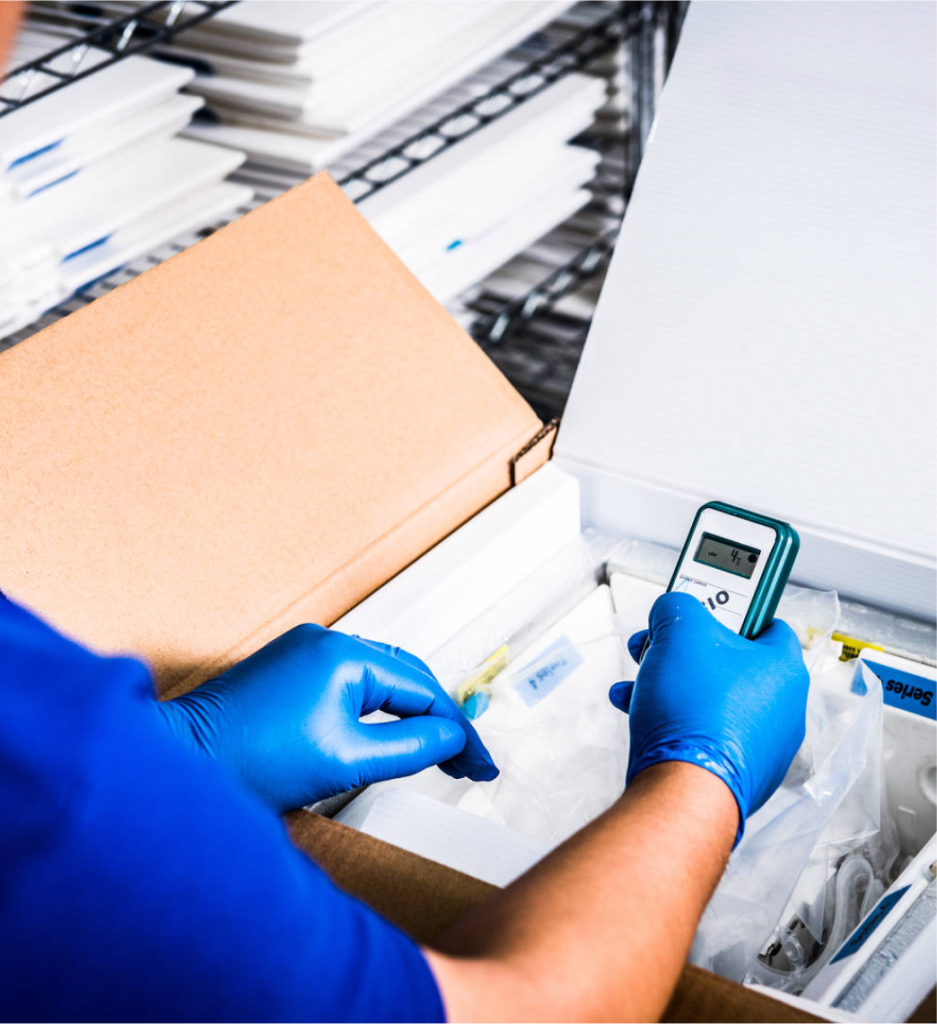
Validated packaging, insulated containers, and refrigeration units are only the starting point. Real-time monitoring devices are essential to confirm that conditions are maintained throughout the journey, not just at dispatch and delivery.
Visibility through monitoring and tracking
Modern cold chain logistics relies heavily on data. IoT sensors, GPS tracking, and cloud-based platforms allow pharma professionals to monitor temperature, humidity, and location in real time.
This visibility enables rapid intervention if conditions drift out of range and provides the audit trails regulators expect. In cold chain logistics for pharmaceuticals, data is no longer optional — it’s operational insurance.
Storage that supports compliance
Warehousing plays an equally critical role. Temperature-controlled storage environments must be validated, mapped, and regularly audited to ensure consistency across all zones.
Staff training is just as important as equipment. Even the most advanced cold storage facility can fail if personnel don’t understand handling requirements or escalation procedures.
Common challenges in pharma cold chain management
Despite best efforts, several challenges continue to shape pharma cold chain logistics.
Regulatory complexity remains high, with different markets applying different standards and documentation requirements. Staying compliant demands constant attention and robust processes.
Cost pressure is another reality. Specialised transport, monitoring technology, and training all come at a premium. The challenge lies in balancing cost-efficiency without compromising quality or compliance.
Risk management is also ongoing. Temperature excursions, equipment failure, and unexpected delays can never be fully eliminated, only mitigated through planning and resilience.
Related Reading: AI and Robotics: the new face of medical logistics
Practical steps pharma teams can take
Strong cold chain logistics don’t happen by chance. They are built through deliberate choices and continuous improvement.
Working with experienced logistics partners is one of the most impactful decisions a pharma company can make. Providers with proven expertise in pharma cold chain logistics understand regulatory expectations, risk points, and sector-specific requirements.
Investing in training ensures everyone involved — from warehouse teams to transport coordinators — understands the importance of temperature integrity and knows how to respond when issues arise.
Using data analytics to review performance can uncover patterns, inefficiencies, and risk areas. Over time, this insight supports better route planning, inventory decisions, and cost control.
Finally, contingency planning matters. Equipment failures and delays will happen. Having documented response plans in place allows teams to act quickly and minimise impact when they do.
What’s next for cold chain logistics for pharmaceuticals
The future of cold chain logistics is increasingly digital, transparent, and sustainability-focused.
Blockchain is gaining traction as a tool for traceability, helping pharma companies verify product authenticity and maintain immutable temperature records.
Sustainability is also rising up the agenda. Energy-efficient storage, optimised routing, and greener packaging solutions are becoming integral to modern pharma cold chain management.
Predictive analytics and AI are enabling more proactive decision-making, helping organisations anticipate risks before they disrupt supply chains.
Related Reading: Healthcare logistics: smarter, faster, and safer with tech
Key Takeaway
Cold chain logistics is no longer just a technical requirement — it’s a strategic capability. For pharma professionals, getting cold chain logistics right means protecting product integrity, ensuring compliance, and safeguarding patients.
By investing in visibility, training, trusted partnerships, and data-driven decision-making, pharmaceutical companies can build resilient cold chains that stand up to growing complexity and scrutiny.
Start optimizing your cold chain today—contact us for a tailored solution.